


At Addit, we specialize in the processing of carbon steel, stainless steel, and aluminum. Each of these materials requires a different technological approach – from machining parameters and forming methods to the surface quality requirements of the finished component.
For this reason, at Addit the processes for each material group are fully separated in terms of personnel, competencies, machinery, and tooling. We use dedicated machines, tools, fixtures, templates, and workstations, while operators follow separate training programs tailored to the material they work with.
We provide comprehensive project execution – from material preparation and cutting, through bending, insertion and resistance welding, to welding, grinding, and surface treatment. This allows subsequent operations to be carried out within one consistently planned manufacturing process.
Go to the selected process:
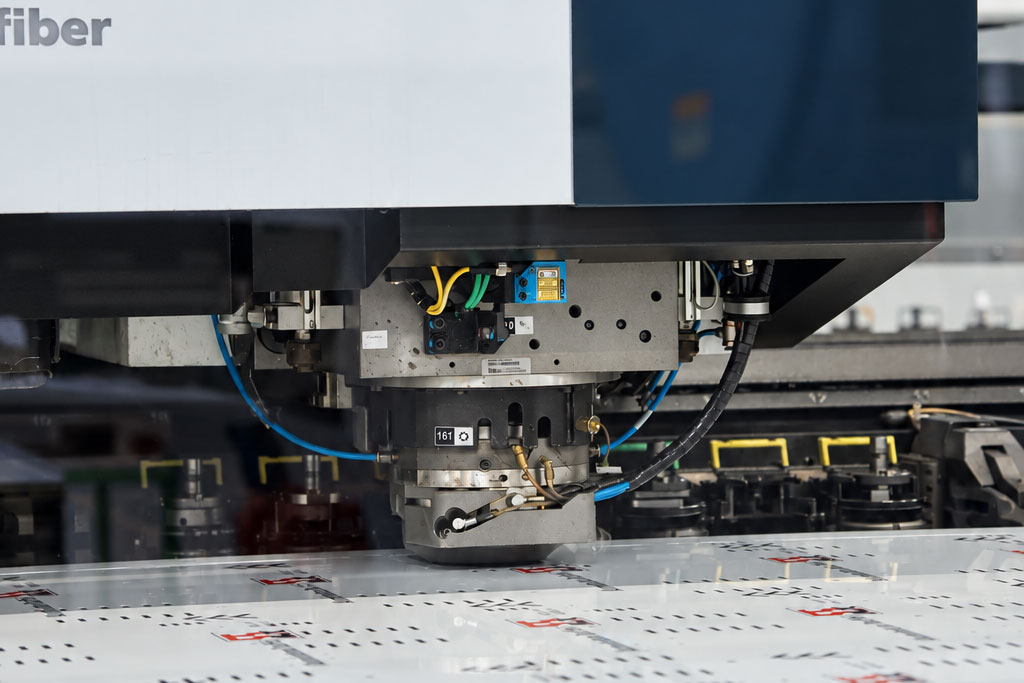
The process begins with full material inspection and identification. We maintain heat number traceability, while nesting is managed across the entire company to optimize part layout on sheets, reduce scrap, and maximize material utilization.
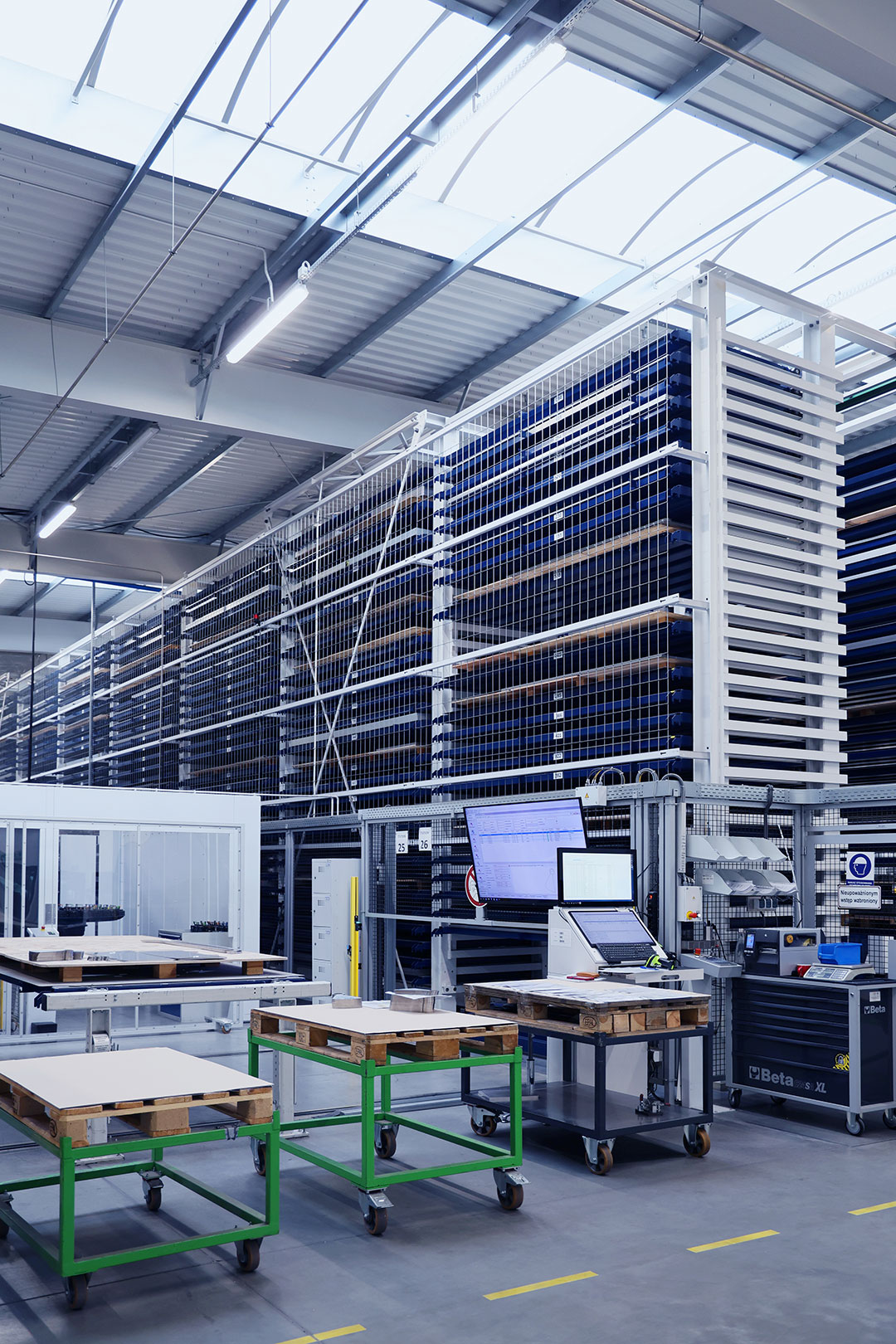
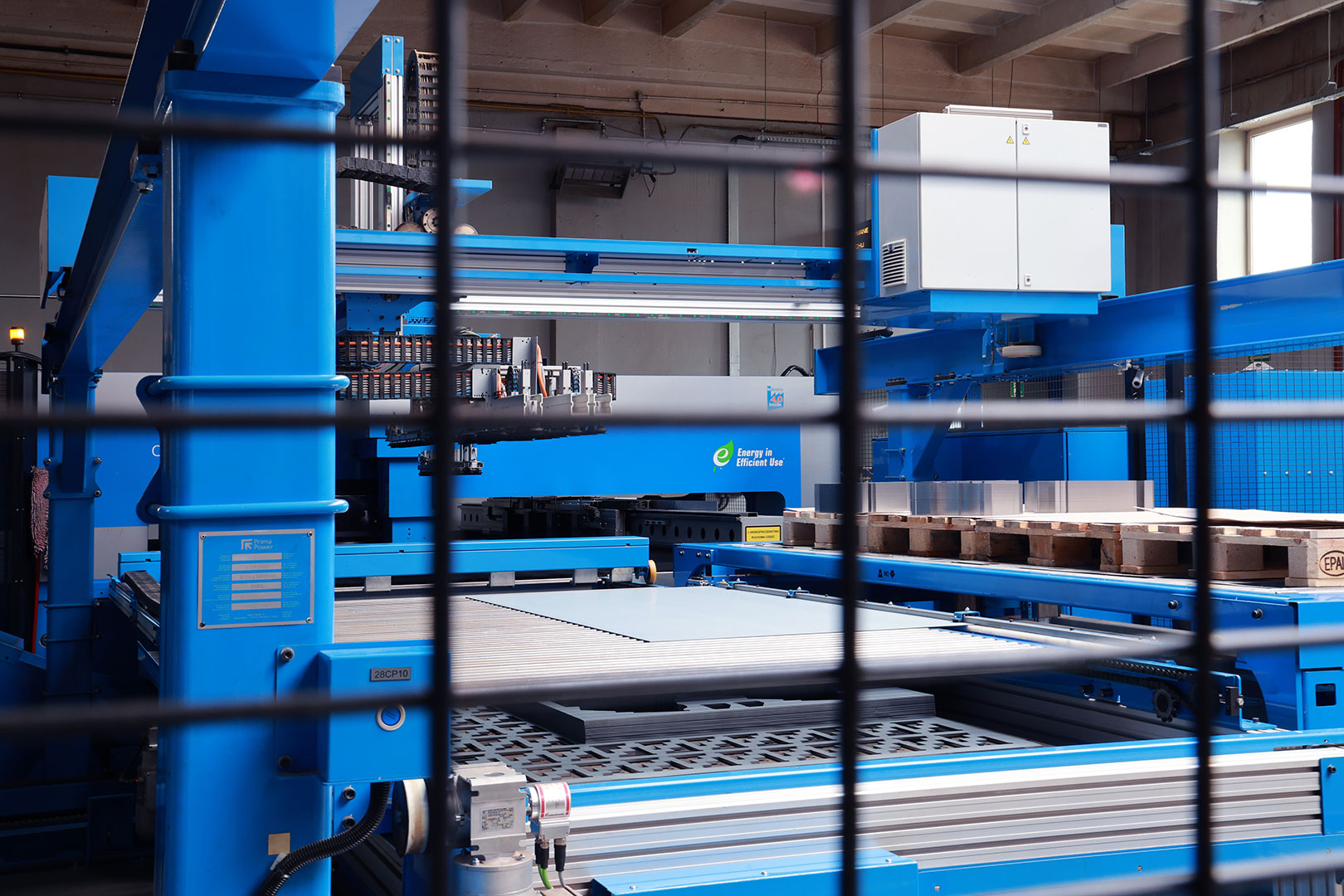
Material flow is supported by automated high-bay storage systems as well as automated loading and unloading solutions. The tower storage system operates in line with Industry 4.0 principles – stored materials are identified by parameters including material type and heat number, while material flow is controlled according to the FIFO principle.
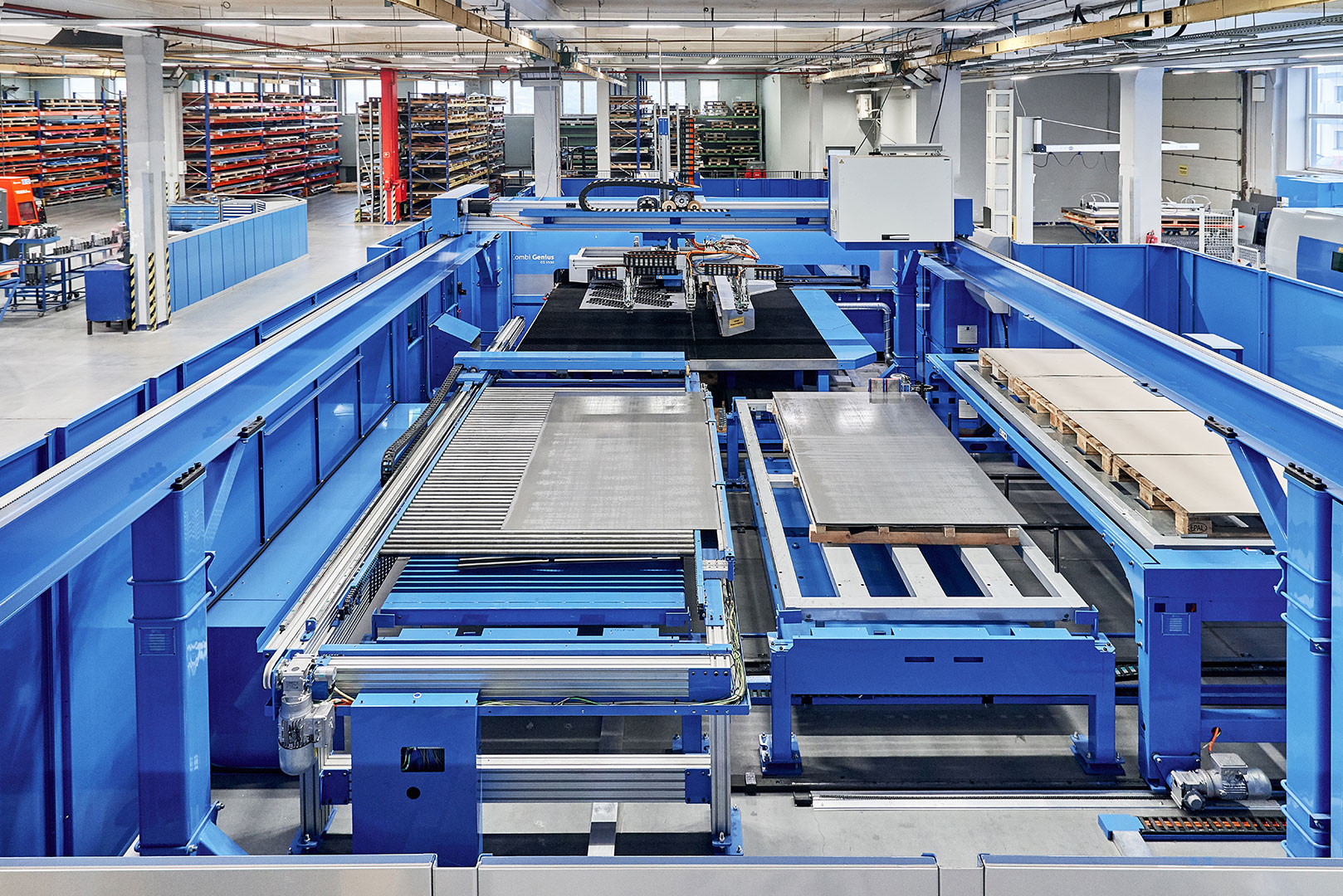
For cutting and punching, we use machines from manufacturers including Trumpf and Prima Power, including versatile Combi systems that combine laser cutting with punching, forming, and tapping. This allows selected operations to be completed within a single technological process, reducing the number of setups and shortening component lead times.
The standard machine working area is up to 3000 × 1500 mm. Cutting is performed using both oxygen and nitrogen, with the process selected according to the material type and required edge quality.
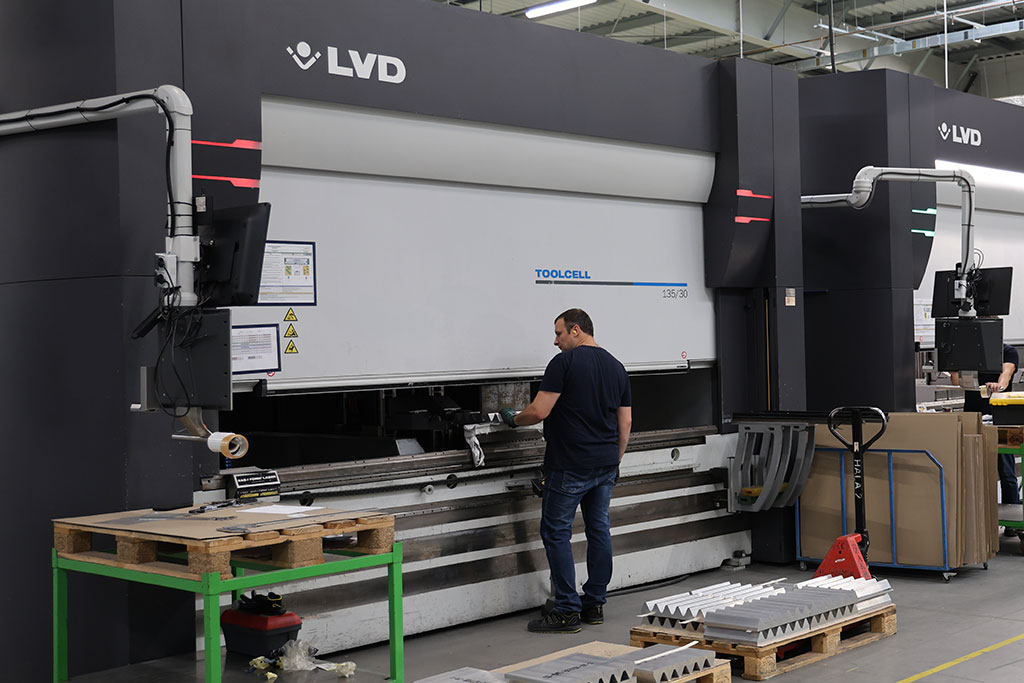
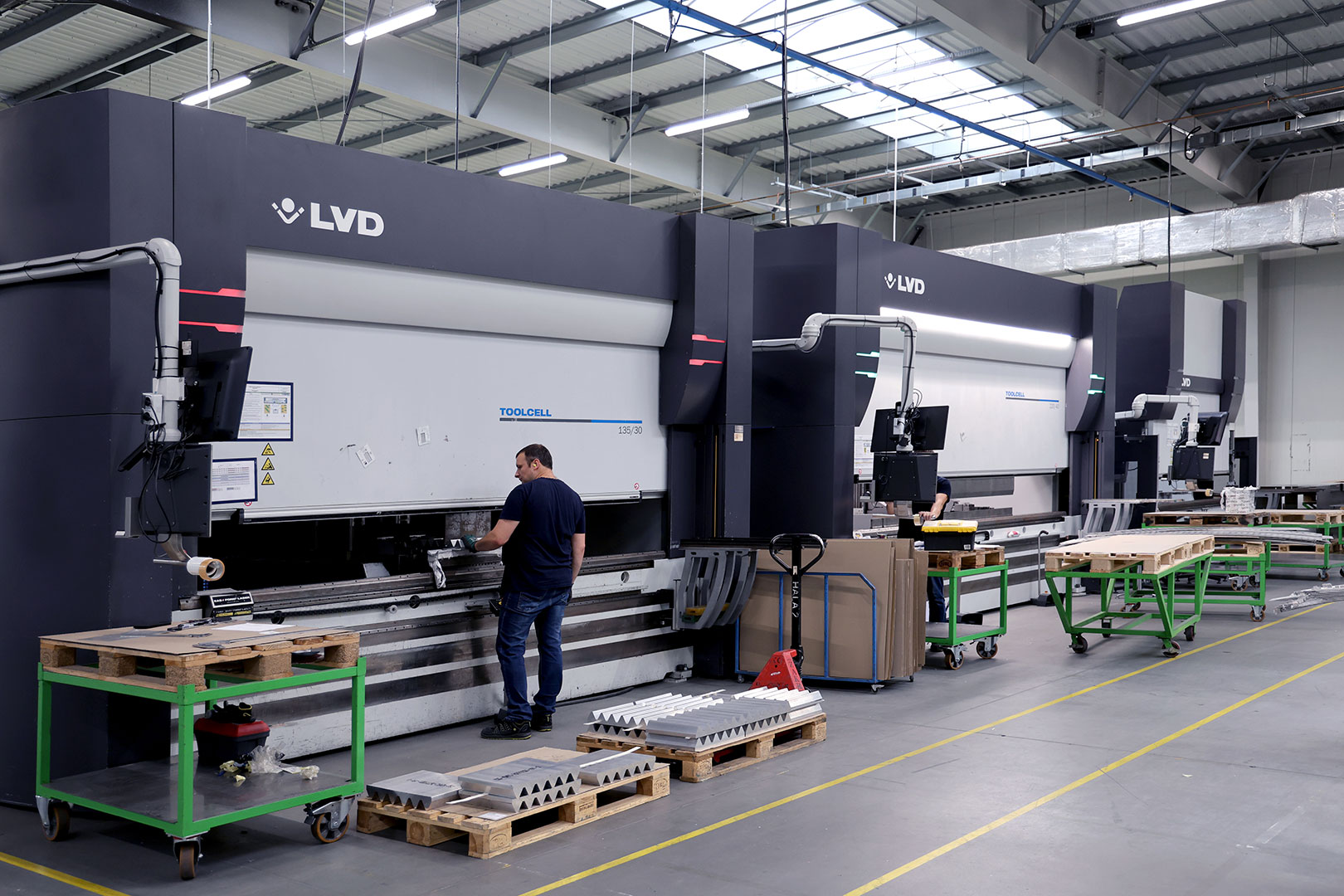
Carbon steel, stainless steel, and aluminum behave differently during forming, which is why selecting the correct parameters, tools, and operator expertise is particularly important in the bending process. Material separation is maintained at this stage as well, with dedicated machines, tools, and fixtures assigned to individual material groups.
Our extensive press brake fleet allows us to select the most suitable technology according to component geometry, dimensions, production volume, and specific project requirements. We use presses from manufacturers including SAFAN, LVD, and Prima Power, equipped with solutions such as multi-axis control, automatic tool setup, and laser angle measurement, increasing process repeatability and reducing production preparation time.
Our machinery also includes automatic angle correction, radius-forming tools, marking-free bending solutions, and technologies for more demanding geometries. For panel-type components, we also use Fast Bend technology, where a manipulator automatically moves the part during processing, reducing the need for manual lifting and positioning.
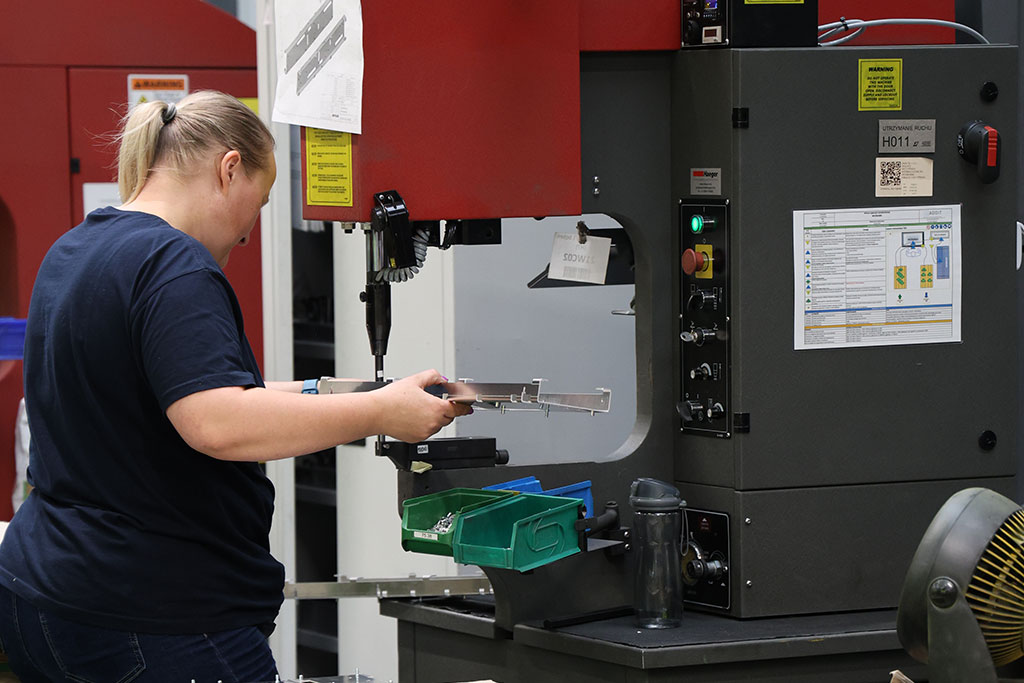
Insertion enables fastening elements to be integrated directly into the component before subsequent manufacturing stages. The process follows the same material separation principle, with tools and fixtures selected according to the specific process and material group.
We use Haeger hydraulic presses with forces of 60 and 71 kN, including workstations equipped with modular automatic feeding systems, dedicated tooling, and quality control solutions. Automation improves process repeatability, reduces the risk of errors, and supports both flexible production requirements and serial manufacturing.
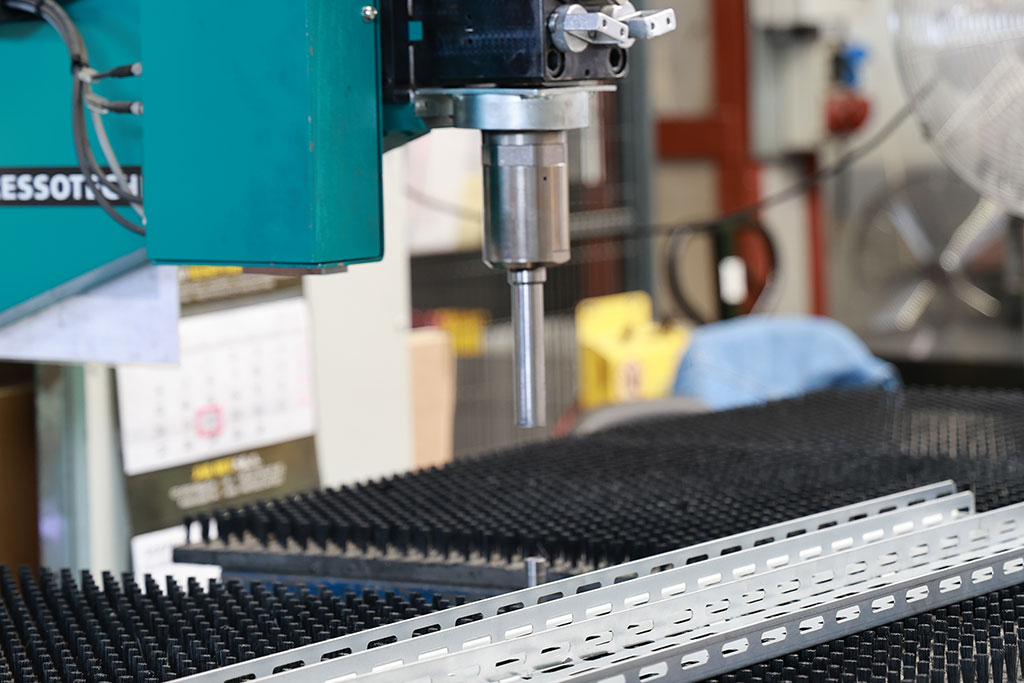
The resistance welding technology is selected according to the material type, component design, and joint requirements. This allows us to tailor the process to the specific product rather than applying a single solution to different materials and geometries.
Our machinery includes equipment from Schlatter, ASPA, SOYER, and AWL, including systems with power ratings up to 980 kVA, 1000 Hz medium-frequency equipment, and CNC systems with positioning capabilities. This diversified equipment allows the welding method to be matched to the product design while ensuring process stability and repeatability.
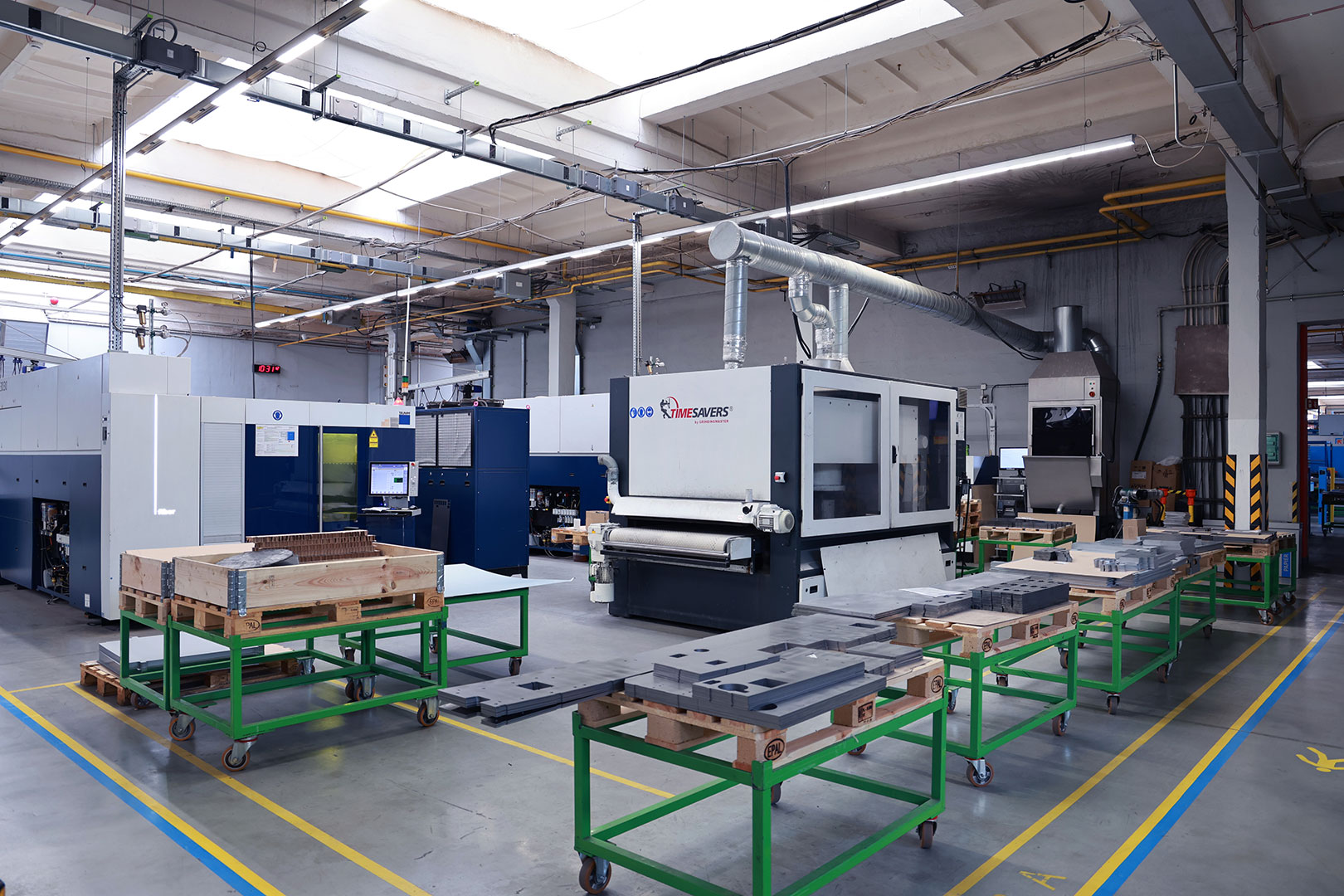
Comprehensive Processing Within One Manufacturing Process
The combination of a specialized machine park, automation, and material control enables us to guide a project through successive manufacturing stages – from a cut sheet to a finished component requiring welding, grinding, cleaning, or surface treatment.


